

Bead Mill Machine for Inkjet Ink and Paint: Why Vertical Grinding Delivers Better Results

Author: Moeez Ullah | Shenzhen Sanxing Feirong Machinery Co., Ltd.
Published: August 2026
Category: Grinding Technology Engineer | Grinding Technology
Pigment dispersion is the single biggest factor separating a mediocre ink or paint from a high-performance one. Whether you're producing digital inkjet ink or industrial and decorative paint, the fineness and stability of your pigment particles directly determine color strength, gloss, viscosity control, and shelf life. That's why the bead mill machine sits at the center of nearly every serious ink and paint production line — and why choosing the right type of bead mill machine matters more than most manufacturers realize.

Why Pigment Dispersion Quality Depends on the Bead Mill Machine
In both inkjet ink and paint manufacturing, raw pigment arrives as agglomerated particles that must be broken down and evenly dispersed throughout a liquid base. A bead mill machine accomplishes this using small grinding beads that collide with pigment particles inside a rotating chamber, reducing them to the fine, uniform sizes needed for consistent color and flow.
Poor dispersion shows up fast: uneven color, reduced gloss, nozzle clogging in inkjet systems, poor opacity, and pigment settling over time. A properly specified bead mill machine solves these problems at the source, which is why pigment and coatings manufacturers treat grinding equipment selection as a core quality decision, not just a production step.
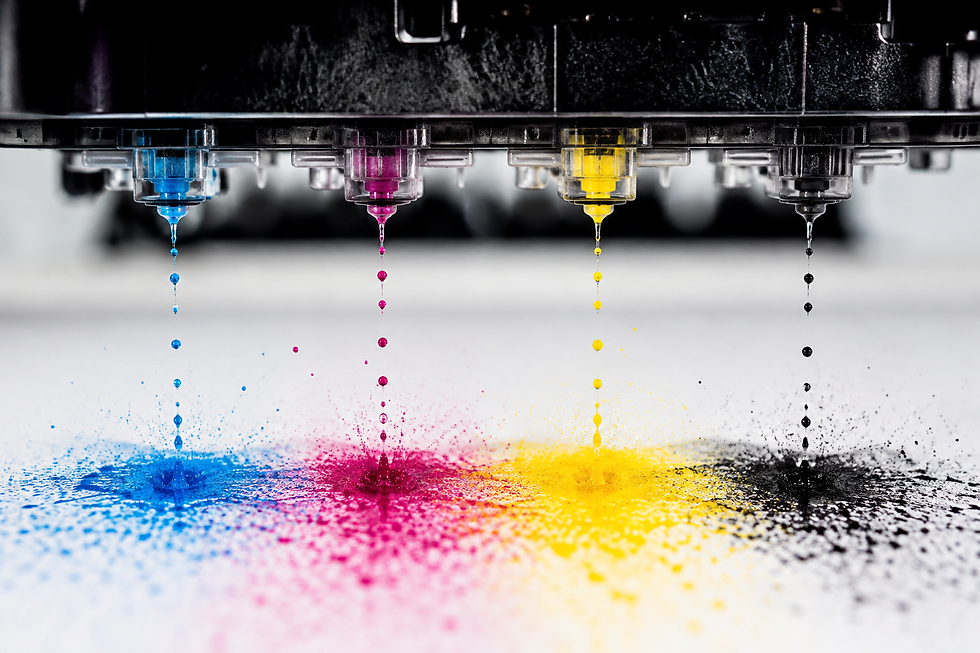
What Inkjet Ink Production Demands from a Bead Mill Machine
Digital inkjet ink has some of the strictest particle size requirements of any pigment-based product. Print heads use extremely small nozzles, so any oversized particle can cause clogging, streaking, or inconsistent print quality. This makes inkjet ink one of the most demanding applications for a bead mill machine.
Key requirements include:
Sub-micron particle size to prevent nozzle clogging
Extremely narrow particle size distribution for consistent print density
High color strength per unit of pigment, reducing material cost
Long-term dispersion stability, so ink doesn't separate in storage
A bead mill machine built for this level of precision needs to deliver both fine grinding and tight control — which is exactly where the vertical vs. horizontal comparison becomes important.

What Paint Production Demands from a Bead Mill Machine
Paint manufacturing — whether decorative, industrial, or automotive — has slightly different priorities but still depends heavily on the bead mill machine to hit target specifications:
Consistent tinting strength across production batches
Good gloss and opacity from properly dispersed pigment
Stable viscosity during application
Resistance to pigment settling in the can over time
While paint doesn't always require the sub-micron precision inkjet ink does, high-quality paint producers still rely on a well-tuned bead mill machine to avoid batch-to-batch inconsistency, which is one of the most common complaints in coatings manufacturing.
Vertical Bead Mill Machine vs. Horizontal: Which Wins for Ink and Paint?

This is where the equipment choice really matters. A vertical bead mill machine consistently outperforms a horizontal one for pigment-heavy applications like inkjet ink and paint, for several concrete reasons:
1. Finer, More Uniform Particle Size Gravity-assisted bead distribution in a vertical bead mill machine reduces dead zones, resulting in a tighter particle size distribution — critical for both ink clarity and paint color consistency.
2. Better Control Over Residence Time Vertical bead mill machines allow operators to fine-tune how long pigment stays in the grinding zone, making it easier to hit the exact particle size inkjet ink requires without over-processing.
3. Reduced Risk of Nozzle-Clogging Oversized Particles Because vertical bead mill machines produce a more consistent size distribution, the risk of stray oversized particles — a major cause of inkjet nozzle failure — is significantly reduced.
4. Easier Cleaning Between Color Batches Many vertical bead mill machine designs offer easier chamber access, which matters in ink and paint production where frequent color changeovers are common.
5. Lower Energy Use Per Unit of Fineness A vertical bead mill machine typically achieves target fineness more efficiently, lowering energy cost per batch — a meaningful advantage at industrial ink and paint production volumes.
Horizontal bead mill machines still have a place in high-throughput, less color-critical applications, but for inkjet ink and premium paint lines where fineness and consistency define product quality, a vertical bead mill machine is generally the stronger choice.
Choosing the Right Bead Mill Machine for Your Ink or Paint Line
When selecting a bead mill machine for inkjet ink or paint production, consider:
Target particle size (sub-micron for inkjet, slightly coarser tolerance for most paints)
Pigment type and hardness, which affects bead size and material selection
Batch size and color-changeover frequency
Ease of cleaning between production runs
Vertical vs. horizontal configuration, based on fineness requirements

Final Thoughts
Whether you're producing inkjet ink or paint, pigment dispersion quality is not optional it's the foundation of product performance. A bead mill machine determines whether your final product delivers sharp, consistent color or falls short with clogging, settling, and batch inconsistency. For manufacturers chasing the fine, stable dispersion that inkjet ink and premium paint demand, a vertical bead mill machine offers a clear, measurable advantage over horizontal alternatives.
External Resources
ASTM D1210 – Standard Test Method for Fineness of Dispersion of Pigment-Vehicle Systems
(The industry-standard test method used to measure pigment dispersion fineness in paints and coatings.)
ASTM Standards for Particle Testing in Printing Ink
(Covers standard test methods for coarse particle content and fineness of grind in printing inks.)
Understanding Fineness of Grind Testing (ASTM D1210 & ISO 1524)
(A practical explainer on how fineness of grind is measured and why it matters for paint quality.)
Frequently Asked Questions
What type of bead mill machine is best for inkjet ink production?
A vertical bead mill machine is generally best for inkjet ink because it achieves the sub-micron particle size and narrow particle size distribution needed to prevent nozzle clogging and maintain consistent print quality.
How fine does pigment need to be for inkjet ink compared to paint?
Inkjet ink typically requires sub-micron particle size due to the extremely small nozzle openings in print heads, while paint generally tolerates a slightly coarser particle size, though fine, uniform dispersion still improves gloss, opacity, and color consistency.
Can the same bead mill machine be used for both ink and paint production?
In many cases yes, but the grinding parameters bead size, chamber design, and residence time — usually need to be adjusted based on the pigment type and target fineness of each product line.
Why does a vertical bead mill machine reduce nozzle clogging in inkjet ink?
A vertical bead mill machine produces a tighter, more uniform particle size distribution, which significantly lowers the chance of oversized particles passing through and blocking inkjet print head nozzles.
How often should a bead mill machine be cleaned between color batches?
Cleaning frequency depends on production schedule, but most ink and paint manufacturers clean the bead mill machine between every color changeover to prevent cross-contamination and maintain color accuracy.


Comments