

Bead Size for Ink and Paint Dispersion: Solving the Most Common Fineness Problems


Most ink and paint dispersion complaints — grainy finish, weak color strength, inconsistent batches — don't come from a broken machine. They come from the wrong bead size for the pigment system being processed. It's the single most overlooked variable in wet grinding, and it's also one of the cheapest to fix once you know what to look for.
Why Bead Size Is the Most Overlooked Variable in Dispersion
Every pigment has a target particle size range for full color development. Beads that are too large can't generate enough contact points to break pigment agglomerates down to that range — the mill runs, but the fineness plateaus early. Beads that are too small lack the mass to overcome viscosity and impact the particles at all, so grinding efficiency drops and cycle time climbs. Operators often respond by running longer cycles or adding more passes, when the real fix is a bead diameter change.
Common Dispersion Problems and Their Root Cause
Grainy or Gritty Finish
This is almost always incomplete deagglomeration — the pigment clusters were never broken down to primary particle size. Undersized bead diameter, insufficient bead loading, or bead size mismatched to pigment hardness are the usual causes.
Poor Color Strength / Weak Tinting
Color strength depends on maximizing pigment surface area exposed to the vehicle. If beads are too large for the pigment's hardness and particle size, dispersion stalls before full surface development — the batch looks "finished" on a grind gauge but underperforms in tint strength testing.
Excessive Heat Buildup
Oversized or overloaded beads increase impact energy and friction, raising batch temperature — a risk for heat-sensitive resins and certain pigment systems. This is usually solved by reducing bead size, adjusting loading ratio, or improving cooling jacket flow, not by slowing the mill down (which just extends cycle time without fixing the root cause).
Matching Bead Diameter to Particle Size Targets

As a general rule, smaller beads produce finer dispersion because more beads fit in the same chamber volume, creating more contact points per pass — but only up to the point where the beads still have enough mass to move the particles. Coarser pre-dispersions (large pigment agglomerates, high initial viscosity) typically start with a larger bead size to break down bulk material efficiently, then move to a smaller bead size for final fineness refinement. Running the full batch on one bead size from start to finish is a common cause of long cycle times and inconsistent results.
Bead Material Matters Too

Bead size isn't the only lever — bead material affects both dispersion efficiency and contamination risk:
Zirconia beads: Higher density improves grinding efficiency and are the standard choice for fine, high-value pigment systems where contamination control matters (inks, high-performance coatings).
Glass beads: Lower cost, suitable for less demanding fineness targets or larger-batch, lower-value formulations.
Steel beads: High density and durability, but iron contamination risk makes them unsuitable for light-colored or chemically sensitive formulations.
Matching both size and material to the specific pigment system is what separates a dialed-in process from one that's "close enough."
Quick Troubleshooting Checklist
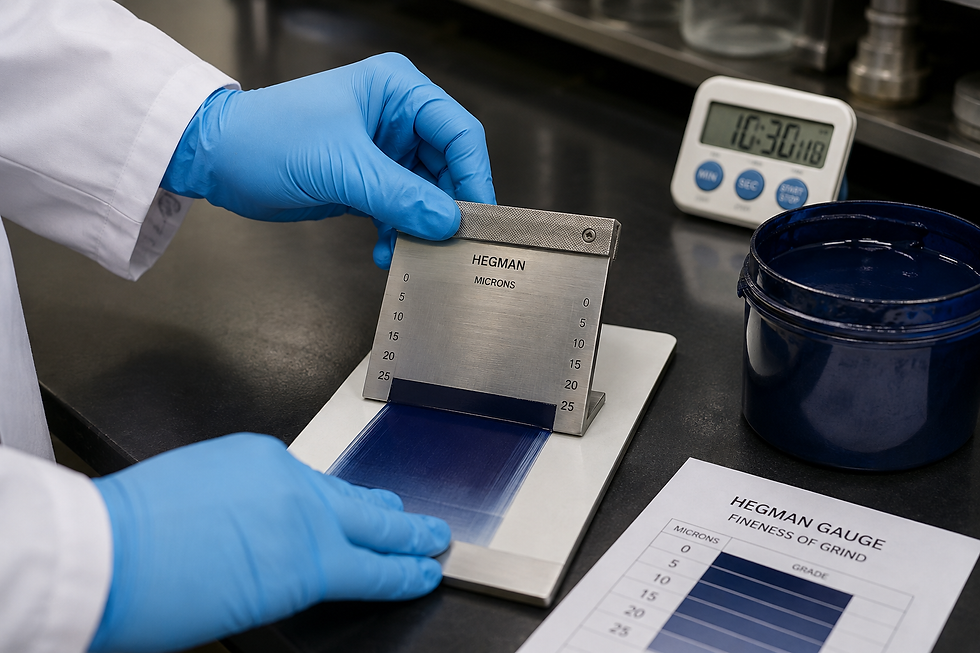
If fineness or color strength isn't hitting spec, check in this order before assuming the machine is at fault:
Confirm bead size matches the current process stage (coarse breakdown vs. fine refinement)
Check bead loading ratio against the manufacturer's recommended range
Verify bead material is appropriate for the pigment (hardness, color sensitivity)
Inspect for bead wear — worn beads lose diameter and grinding efficiency over time
Confirm batch viscosity is within the mill's effective operating range
Frequently Asked Questions
What bead size should I start with for a new pigment system?
There's no universal number — it depends on pigment hardness, target fineness, and initial particle size. A supplier's process engineering team can recommend a starting point based on your specific formulation, then refine it through trial runs.
Can I use the same bead size for the entire dispersion process?
You can, but it's usually inefficient. A two-stage approach — larger beads for initial breakdown, smaller beads for final fineness — typically produces better results in less cycle time.
How do I know if my beads are worn out?
Worn beads lose diameter and become less effective at generating the impact energy needed for dispersion. Signs include declining fineness results at the same cycle time, or increased cycle time to hit the same target.
Does bead size affect production throughput, not just quality?
Yes. The wrong bead size can force longer cycle times or extra passes to compensate, which directly reduces throughput even if the final product eventually meets spec.


Comments