

How We Work With Our Customers: From First Inquiry to Long-Term Partnership

Author: Moeez Ullah Published: September 28, 2026

How We Work With Our Customers: From First Inquiry to Long-Term Partnership
Every customer relationship at Sanxing starts with understanding the material and the process, not with a price list — because the right bead mill depends on what you are grinding and what you need it to become.
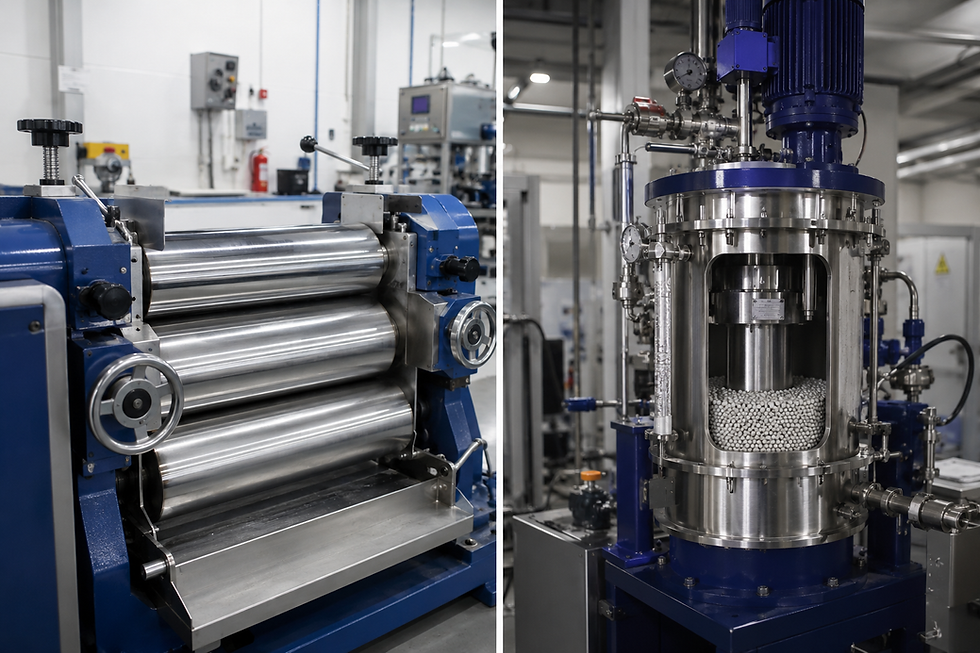
Lab-scale trials on our F4 and W Series bead mills let customers validate a formulation before committing to a production machine.
Equipment is configured around the application: SP Series (seal-free), SD Series (dual-power), SF Series (mechanical-seal), WS horizontal, or a full EPC turnkey production line.
Support does not end at delivery — commissioning, operator guidance, spare parts, and technical troubleshooting are part of the relationship.
Thirty-two years of manufacturing experience, ISO 9001 and CE certification, and 25 patents are the foundation behind the way we work, and we are happy for customers to ask us to prove any of it.
At a Glance | Detail |
Focus keyword | Bead mill manufacturer customer support |
Starting point | A conversation about your material, target particle size, and production goals |
Validation step | Lab-scale trial on F4/W Series bead mills before production commitment |
Equipment options | SP, SD, SF vertical series; WS horizontal series; EPC turnkey lines |
After delivery | Commissioning guidance, operator support, spare parts, technical troubleshooting |
Manufacturer background | 32 years, 25 patents, ISO 9001 and CE certified |
How does Sanxing actually work with its customers? In short: we start by listening, we validate before you invest, we configure equipment around your process instead of the other way around, and we stay involved after the machine is running. Why publish this at all? Because most bead mill suppliers describe their machines in detail and their service in vague terms, and customers deserve to know what working with a manufacturer actually looks like before they pick up the phone. This is our plain-language answer to a question we hear often: what should I expect from Sanxing as a bead mill manufacturer when it comes to customer support?
Step One: We Start With Your Material, Not Our Catalog
The Questions We Ask First
The first conversation with any new customer is not a sales presentation. It is a set of questions: what material are you grinding or dispersing, what particle size do you need to reach, what is your target throughput, what solvent or carrier system are you using, and how sensitive is your product to contamination? Those questions matter because two customers can both ask for a "bead mill" and need completely different machines. A lithium battery slurry, a pigment dispersion, a pharmaceutical suspension, and a hard-metal powder each stress the equipment in different ways, and the right answer to each starts with the material itself.
Why We Do Not Rush to a Quote
A quote issued before we understand the process is a guess with a price attached. We would rather take an extra conversation or two to understand your application properly than send a number that changes later, or worse, a machine that does not fit. If a requirement is unclear, we would rather say so and work it out together than paper over it.
Step Two: Validate Before You Invest

Lab-Scale Trials on F4 and W Series Bead Mills
One of the most valuable things we can offer a new customer is the chance to test before committing to a production-scale machine. Our F4 and W Series laboratory bead mills exist for exactly this purpose: running your actual material through a small-scale mill to see how it responds, which grinding media and process settings work best, and whether the target particle size is realistically achievable. For formulations where dispersion quality is everything, such as nano-scale inks, battery materials, or precision abrasives, that validation step can save months of costly adjustment later.
Turning Trial Results Into a Real Specification
The value of a lab trial is not just a pass or fail. The results give both sides real data: the rotor speed, bead size, and residence time that worked, the particle size distribution achieved, and any issues that showed up along the way. That data becomes the basis for specifying a production machine with confidence, instead of extrapolating from assumptions.
Step Three: Equipment Configured Around Your Application

Matching the Machine to the Process
Sanxing's range covers a broad set of applications, and part of working with customers is helping them choose within it. The SP Series seal-free vertical bead mill suits customers who want to remove the mechanical seal as a maintenance and contamination risk. The SD Series dual-power model adds flexibility for varying viscosities and batch sizes. The SF Series mechanical-seal model remains the right choice for certain high-pressure or specialty processes. The WS horizontal series serves continuous, high-throughput production. We would rather recommend the machine that fits your process than the one that is simply easiest to sell.
Custom Configuration and Turnkey Solutions
Many customers need more than a standalone machine. For those building or expanding a production facility, our EPC turnkey production line solutions cover the full sequence, from material feeding and grinding through downstream steps, designed as one integrated system rather than a collection of separately sourced equipment. That means one accountable partner from planning through commissioning.
Step Four: Delivery, Commissioning, and Getting Your Team Comfortable

A Machine Is Not Finished When It Ships
Shipping a machine is a milestone, not the end of the job. Bringing a new bead mill into production involves installation, commissioning, initial parameter settings, and helping operators become comfortable with how it behaves. We treat that handover as part of the project, because a well-built machine that is set up poorly will underperform, and that reflects on us as much as on the customer.
Operator Guidance That Fits Your Team
Every customer's team is different: some have experienced process engineers, others are new to wet grinding. We adjust our guidance accordingly, making sure the people running the machine day to day understand the settings that matter, what normal operation looks like, and what to watch for as wear parts age.
Step Five: Support That Continues After the Machine Is Running
Technical Troubleshooting and Spare Parts
Even well-engineered equipment eventually needs service, spare parts, or a second opinion when something changes in the process. Our after-sales approach, covered in more depth in our guide to bead mill after-sales technical support, is built around making it easy to reach the people who built your equipment, and keeping the parts you rely on available. When a customer calls with a problem, the goal is a clear answer, not a runaround.
Process Improvement Over Time
Production requirements evolve. A customer who started with one formulation may add another, tighten a particle size specification, or scale up throughput. Because we manufacture the equipment, we can look at what you are running today and advise on adjustments, whether that is a different bead size, a change in operating parameters, or a different configuration altogether.
Step Six: Building a Relationship, Not Closing a Transaction

Factory Visits and Direct Conversations
We welcome customers and prospective partners to visit our facility in Shenzhen, see the production floor, and speak directly with the engineers who design and build the machines. Trust between a supplier and a customer is built through transparency, and there is no substitute for seeing how equipment is actually made.
Why Long-Term Partnership Matters to Us
A single purchase order is not the goal. The customers we value most are the ones who come back: to add capacity, to try a new application, or to ask a technical question five years after their first machine was installed. That kind of relationship only happens when the first experience, from inquiry through commissioning, is handled with care. It is also why we are comfortable being held to a standard: 32 years of experience, ISO 9001 and CE certification, and 25 patents are only meaningful if the day-to-day experience of working with us matches what those credentials suggest.
What You Can Expect From Us
To summarize the way we work: we start with your material and your goals, we help you validate before you invest, we configure equipment around your application, we support your team through commissioning, and we remain available afterward. If any part of that process ever falls short of what we have described here, we want to hear about it directly.
Conclusion
Working with a bead mill manufacturer should feel like working with a partner who understands your process, not a vendor who simply ships a box. That is the standard we hold ourselves to, from the first question about your material through the years of operation that follow. Contact Sanxing Feirong Machinery to start the conversation, arrange a lab trial, or plan a factory visit.
Frequently asked questions
Can I test my material before buying a production machine?
Yes. Our F4 and W Series laboratory bead mills are designed for small-scale trials so you can validate your formulation, grinding media, and process settings before committing to a production-scale machine.
Does Sanxing only sell standalone machines?
No. Alongside individual SP, SD, SF, and WS Series bead mills, we offer EPC turnkey production line solutions for customers who want an integrated system from feeding through grinding and beyond.
What happens after my machine is delivered?
Delivery is followed by commissioning and operator guidance, and ongoing technical troubleshooting and spare parts support after the machine is running.
Can I visit the factory before deciding?
Yes. We welcome customers and prospective partners to visit our Shenzhen facility, walk the production floor, and speak directly with our engineers.


Comments