

New Energy Material Production Line: How the Right Bead Mill Machine Powers Battery Manufacturing

Updated: Aug 5
The global shift toward electric vehicles, energy storage systems, and next-generation batteries has placed enormous pressure on manufacturers to produce finer, more consistent, and more stable materials. At the center of every high-performing new energy material production line sits one critical piece of equipment: the bead mill machine. Without precise, uniform particle grinding, even the best battery chemistry formulas fail to reach their full performance potential.
In this article, we'll break down why the bead mill machine is the backbone of modern new energy material processing, how it fits into a complete production line, and why a vertical bead mill machine consistently outperforms a horizontal one when fine particle size is the goal.

What Is a Bead Mill Machine and Why Does It Matter for New Energy Materials?
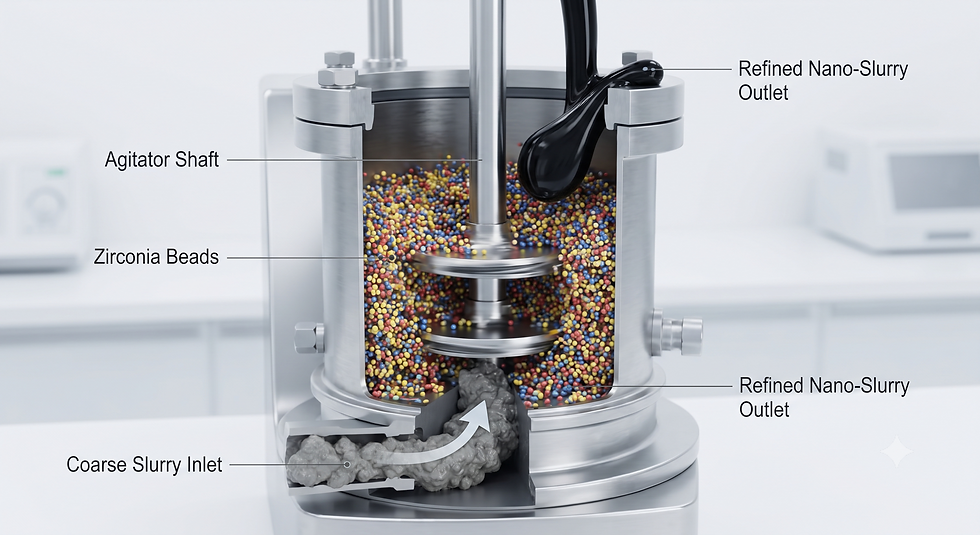
A bead mill machine is a wet grinding and dispersion system that uses small grinding beads — typically made of zirconia, zirconium silicate, or other high-hardness ceramic materials — to break down raw material particles into extremely fine, uniform sizes. The material is pumped into a grinding chamber where high-speed rotation forces the beads to collide with the particles, reducing them down to the micron or even nanometer scale.
For new energy materials, particle size isn't just a quality metric — it's a performance driver. Cathode materials, anode materials, solid electrolytes, and conductive carbon additives all depend on consistent, ultra-fine particle distribution to achieve:
Higher energy density
Longer battery cycle life
Better conductivity and ion mobility
Reduced internal resistance
Improved slurry stability during coating
This is why nearly every serious new energy material production line is built around a properly specified bead mill machine, not a generic industrial grinder.
The Role of the Bead Mill Machine in a Complete Production Line
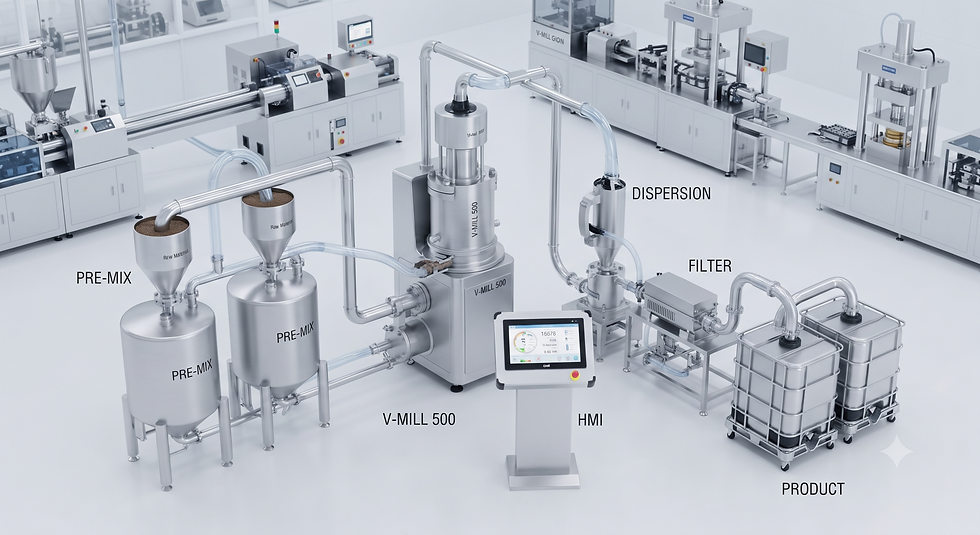
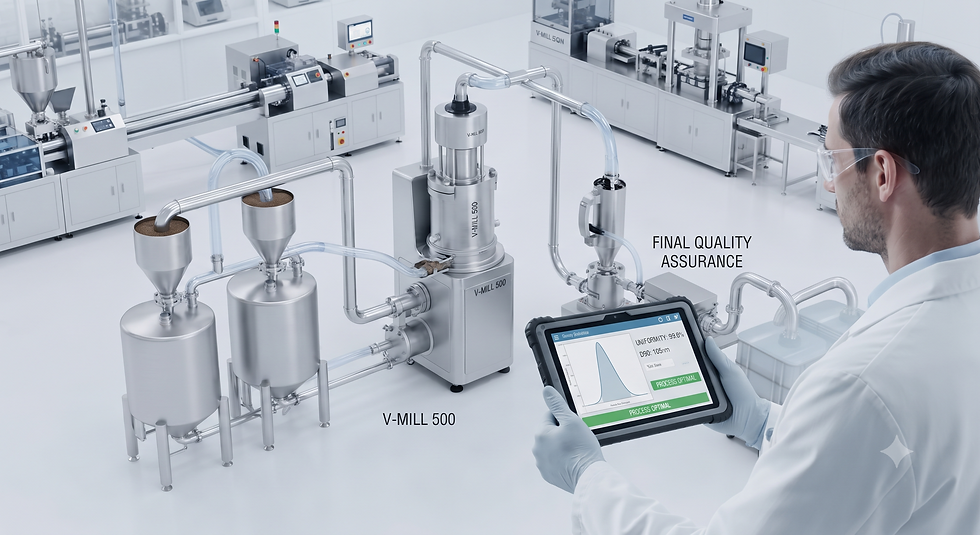
A modern new energy material production line is rarely a single standalone machine. It's an integrated system, and the bead mill machine typically sits at the heart of it, supported by:
Feeding and Pre-Mixing Systems
Raw powders are fed into the system and pre-mixed into a slurry before entering the grinding stage. Consistent feeding directly affects how well the bead mill machine performs downstream.
The Bead Mill Machine (Core Grinding Stage)
This is where particle size reduction actually happens. The bead mill machine determines the final fineness, uniformity, and dispersion quality of the material — arguably the single most important stage in the entire line.
Dispersion and Homogenization
After grinding, materials often pass through dispersers or homogenizers to further stabilize the slurry and prevent particle re-agglomeration.
Filtration and Separation
Fine separation systems remove oversized particles or grinding media residue, ensuring only correctly sized material moves forward.
Automated Control and Monitoring
Modern production lines use intelligent control systems to monitor grinding pressure, flow rate, and particle size in real time — allowing the bead mill machine to run at optimal efficiency without manual intervention.
When all of these stages work together, manufacturers get a stable, repeatable, high-output new energy material production line. But the quality ceiling of the entire system is set by one thing: the bead mill machine itself.
Vertical Bead Mill Machine vs. Horizontal Bead Mill Machine: Which Is More Efficient?
This is the question every serious new energy materials manufacturer eventually has to answer — and it matters more than most buyers realize.
Why a Vertical Bead Mill Machine Grinds More Efficiently
A vertical bead mill machine positions the grinding chamber upright, which changes how the beads and material interact in several important ways:
1. Better Bead Packing and Distribution In a vertical bead mill machine, gravity helps beads settle and distribute more evenly throughout the chamber. This reduces dead zones where material passes through without being properly ground — a common inefficiency in horizontal designs.
2. Longer, More Controlled Residence Time Vertical bead mill machines allow finer control over how long material stays in the grinding zone. This means operators can dial in exactly the particle size needed for cathode, anode, or solid electrolyte materials without over- or under-processing the batch.
3. More Uniform Particle Size Distribution Because material flow is more consistent in a vertical bead mill machine, the resulting particle size distribution is tighter — critical for battery materials, where inconsistent particle size directly translates into inconsistent battery performance.
4. Easier Scale-Up from Lab to Production A vertical bead mill machine typically scales more predictably from lab-scale testing to full production volumes, which shortens development timelines for new battery material formulations.
5. Lower Energy Consumption Per Unit of Fineness Achieved Because grinding is more efficient per pass, a vertical bead mill machine often requires less energy input to reach the same target fineness compared to a horizontal system — a meaningful cost advantage at industrial production scale.
Where Horizontal Bead Mill Machines Still Have a Place
To be fair, horizontal bead mill machines aren't obsolete. They can offer higher throughput for less demanding grinding tasks and are sometimes preferred for larger-batch, coarser-grind applications. But when the target is ultra-fine or nano-scale particle size — which is exactly what next-generation battery materials require — the vertical bead mill machine consistently delivers better results.

Applying the Bead Mill Machine to Specific New Energy Materials
Different new energy materials place different demands on the bead mill machine. Here's how it plays out across common applications:
Cathode Material Grinding
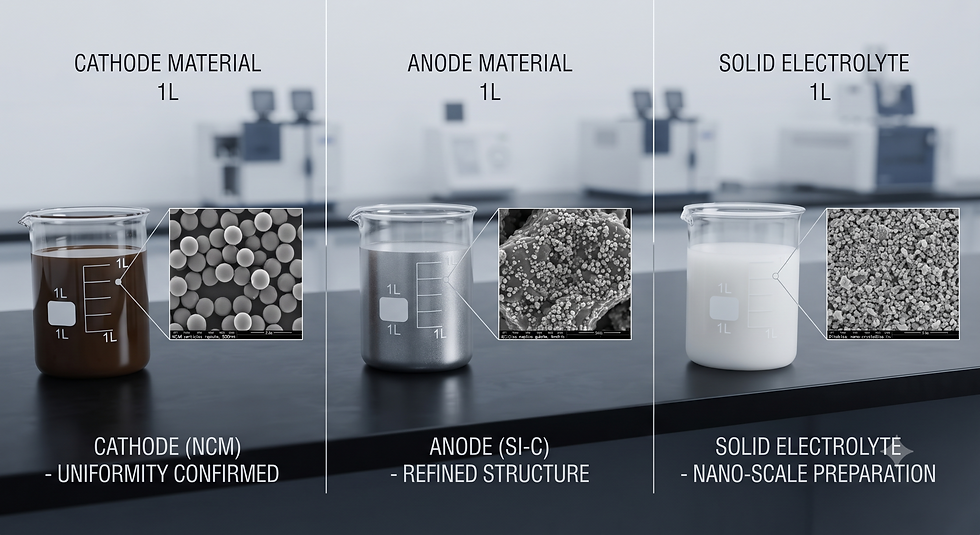
Materials like lithium iron phosphate (LFP), NCM, and lithium manganate require extremely uniform particle size to maintain consistent charge/discharge performance across every battery cell produced. A vertical bead mill machine helps manufacturers hit tight particle size specifications batch after batch.
Anode Material Grinding
Graphite and silicon-carbon anode materials benefit from the finer, more controlled grinding a vertical bead mill machine provides, improving both conductivity and mechanical stability during battery cycling.
Solid Electrolyte Processing
As solid-state battery technology advances, solid electrolyte materials demand exceptionally fine and pure particle preparation. The precision of a vertical bead mill machine makes it well suited to these emerging, high-spec applications.
Conductive Carbon and Slurry Dispersion
Conductive additives need to be evenly dispersed throughout the slurry to maintain consistent conductivity. A properly configured bead mill machine ensures these fine particles remain well-distributed rather than clumping.
Choosing the Right Bead Mill Machine for Your Production Line
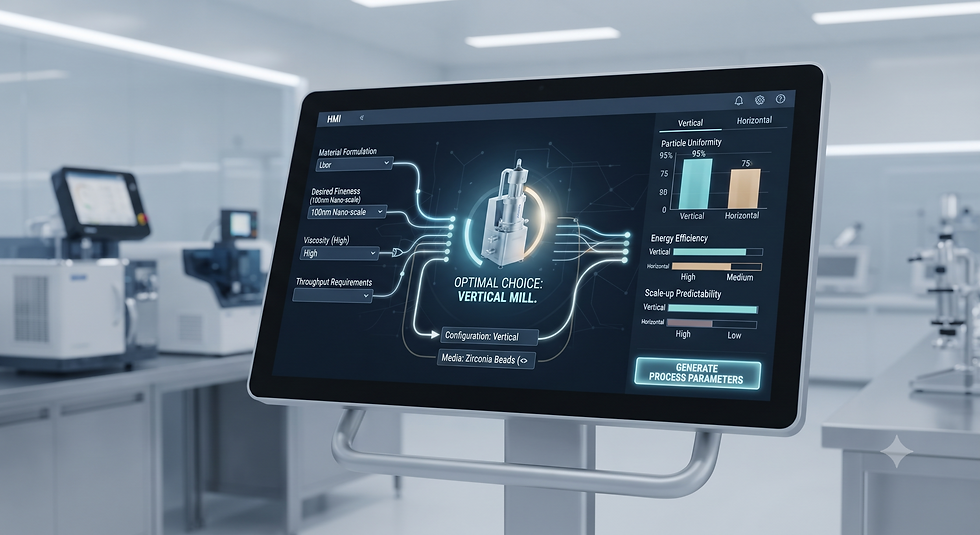
When evaluating a bead mill machine for a new energy material production line, manufacturers should consider:
Target particle size (micron vs. nano-scale requirements)
Material viscosity and slurry characteristics
Production volume and throughput needs
Vertical vs. horizontal configuration, based on the fineness required
Automation and control system compatibility with the rest of the production line
Energy efficiency at target production scale
For most cathode, anode, and solid electrolyte applications where fine, consistent particle size is non-negotiable, a vertical bead mill machine is typically the stronger long-term investment.
Final Thoughts
As the new energy sector continues to scale, the demands placed on material processing equipment will only increase. The bead mill machine isn't just one component in a new energy material production line — it's the stage that determines whether a battery material formula actually performs the way it was designed to. Choosing a vertical bead mill machine over a horizontal one gives manufacturers a real, measurable advantage in particle fineness, consistency, and long-term energy efficiency.
Manufacturers building or upgrading a new energy material production line should treat bead mill machine selection as a core engineering decision, not an afterthought — because in battery materials, particle size is performance.
Frequently Asked Questions (FAQ)
Why is particle size reduction so critical for new energy materials?
Particle size directly dictates the performance parameters of modern batteries. Achieving ultra-fine or nano-scale distribution ensures higher energy density, longer cycle life, better ion mobility, and improved slurry stability during electrode coating.
What is the primary difference between a vertical and a horizontal bead mill machine?
The core difference lies in chamber orientation and how gravity interacts with the grinding media. A vertical configuration utilizes gravity to assist with even bead packing and consistent flow distribution, minimizing dead zones and yielding tighter, more uniform particle size distributions.
When should a manufacturer choose a vertical bead mill over a horizontal one?
A vertical bead mill is generally the preferred choice when processing ultra-fine or nano-scale materials—such as advanced cathode, anode, and solid electrolyte slurries—where strict particle uniformity and energy efficiency are required.
What types of grinding media are typically used in new energy applications?
High-purity ceramic materials—such as zirconia, zirconium silicate, and silicon carbide—are standard. These high-hardness media prevent metal contamination and maintain chemical purity in sensitive battery material formulations.
Can bead mills be integrated into automated production lines?
Yes. Modern bead mill machines are frequently paired with intelligent HMI control systems, pre-mixing tanks, and automated feeding skids to monitor grinding pressure, flow rates, and particle specifications in real time.
What batch volumes do lab-scale horizontal bead mills typically handle?
Lab-scale horizontal bead mills are specifically engineered for R&D departments, pilot lines, and process-development teams handling small batch volumes, typically ranging from $0.3$ to $5$ liters before scaling up to full industrial production lines.
How does material viscosity impact the performance of a bead mill?
Higher slurry viscosities require careful optimization of agitator speeds, flow rates, and bead sizing to ensure proper shearing forces without causing excessive pressure buildup or clogging within the grinding chamber.
Why is zirconia commonly chosen as the grinding bead material?
Zirconia beads offer exceptional wear resistance, high density, and mechanical strength. Their hardness allows for efficient energy transfer during high-speed collisions while preventing media degradation that could contaminate sensitive battery slurry formulas.


Comments