

Bead Mill Total Cost of Ownership: Calculating the Real ROI Beyond the Purchase Price

Author: Moeez Ullah Published: September 7, 2026
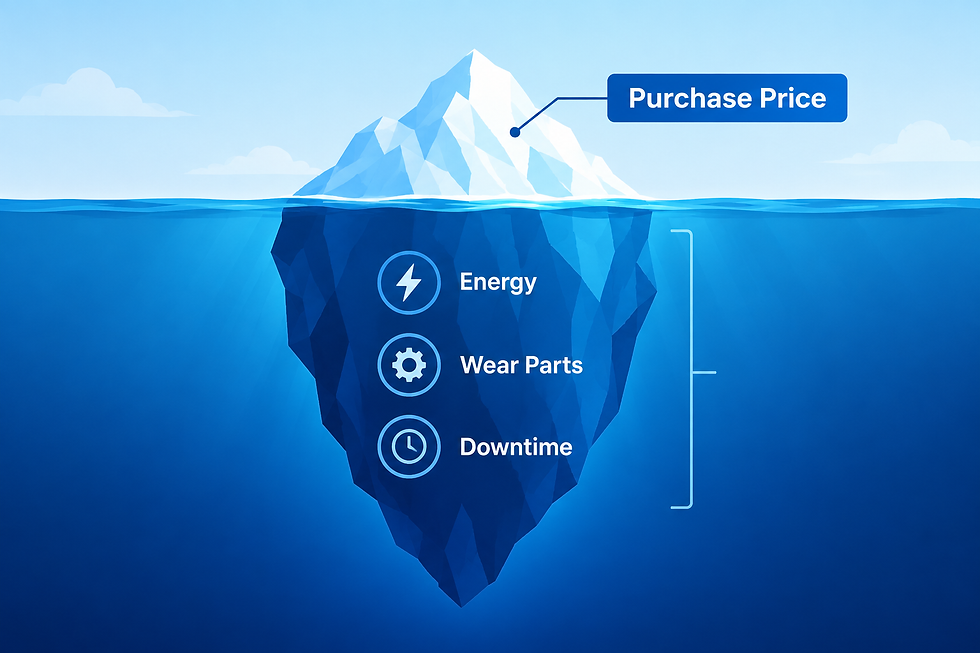
Bead Mill Total Cost of Ownership: Calculating the Real ROI Beyond the Purchase Price
At a Glance | Detail |
Focus keyword | Bead mill total cost of ownership |
Core insight | Purchase price is typically the smallest component of a bead mill's true lifetime cost |
Five cost components | Capital cost, energy consumption, wear part replacement, downtime/labor, throughput/output value |
Typical bead mill energy use | Roughly 5–100 kWh per ton, depending on target fineness and material |
Why this matters | Two machines priced identically upfront can differ enormously in 5-year operating cost |
Who should read this | Procurement and finance stakeholders evaluating equipment, not just process engineers |
Most bead mill purchase decisions start and end with a single number: the quote. That's a mistake procurement teams make more often than they'd like to admit, because the purchase price is typically the smallest line item in a bead mill's true lifetime cost. This guide walks through the actual bead mill total cost of ownership framework — the calculation that tells you what a machine really costs, not just what it costs to buy.
Why Purchase Price Is the Least Important Number in This Decision
Two bead mills quoted at the same upfront price can diverge enormously in real cost once energy consumption, wear part replacement frequency, and downtime risk are factored in over a multi-year operating life. Industry guidance on equipment selection is consistent on this point: buyers are advised to weigh total cost of ownership — including initial purchase price, maintenance, and operational costs — rather than anchoring on the quote alone (factors in choosing a horizontal bead mill, Allwin Grinding). The gap between "cheapest to buy" and "cheapest to own" is exactly where most bad equipment decisions happen.
The Five Cost Components of True Total Cost of Ownership

1. Capital/Purchase Cost
This is the number everyone compares — and the one that matters least over a multi-year horizon. It's still relevant for cash flow and financing decisions, but treating it as the primary decision criterion is where TCO analysis typically goes wrong.
2. Energy Consumption
Bead mill energy consumption varies substantially by application: specific grinding energy for wet bead milling commonly ranges from roughly 5 up to 100 kWh per ton processed, depending on target fineness, material hardness, and mill configuration (grinding mill process control parameters, patent US10569279). At industrial electricity rates, that range translates into a meaningfully different annual operating cost depending on which end of it your process and equipment land on — and it's a cost that compounds every single production hour, unlike a one-time purchase price.
3. Grinding Media and Wear Part Replacement
Grinding media isn't a one-time cost — it's consumed continuously and has to be replenished on an ongoing basis, with the replacement rate depending on media hardness, material abrasiveness, and how well the equipment's wetted components are engineered to resist wear. As covered in our grinding media selection guide, the cheapest media per kilogram often isn't the cheapest option once wear rate and required grinding time are factored in — the same logic applies to the equipment itself, not just the consumable media running through it.
4. Downtime and Maintenance Labor
Every hour a production line is down for seal replacement, media reload, or unplanned maintenance is an hour of lost output — and in continuous production environments, that lost output often costs more than the maintenance itself. Equipment with a documented duty-cycle rating and a clear wear-part service schedule (the criteria covered in our industrial quality bead mill checklist) is what makes this cost predictable instead of a recurring surprise.
5. Output Value / Throughput Efficiency
The flip side of cost is value delivered: a mill that reaches target particle size faster, with fewer passes, or with less circulation grinding required, effectively produces more usable output per operating hour — directly offsetting the other four cost components. This is where equipment engineering quality shows up most directly in the bottom line.
A Worked Illustration: Comparing Two Equipment Options Over Five Years

The table below is an illustrative framework, not a quoted price for any specific machine — the point is the calculation method, not the numbers themselves. Every buyer should build this table with figures from their own actual quotes, energy rates, and process requirements.
Cost Component | Machine A (Lower Purchase Price) | Machine B (Higher Purchase Price) |
Purchase price | Lower | Higher |
Annual energy cost | Higher (less efficient design) | Lower (more efficient design) |
Annual wear part cost | Higher (faster media/lining wear) | Lower (wear-resistant engineering) |
Annual downtime cost | Higher (shorter service intervals) | Lower (longer duty-cycle rating) |
5-year total | Often higher than it first appears | Often lower despite higher upfront cost |
This is the exact pattern that makes purchase-price-only comparisons misleading: the machine that looks more expensive on day one frequently costs less by year three, once energy, wear parts, and downtime are added in.
Why Energy Consumption Deserves More Attention Than It Gets
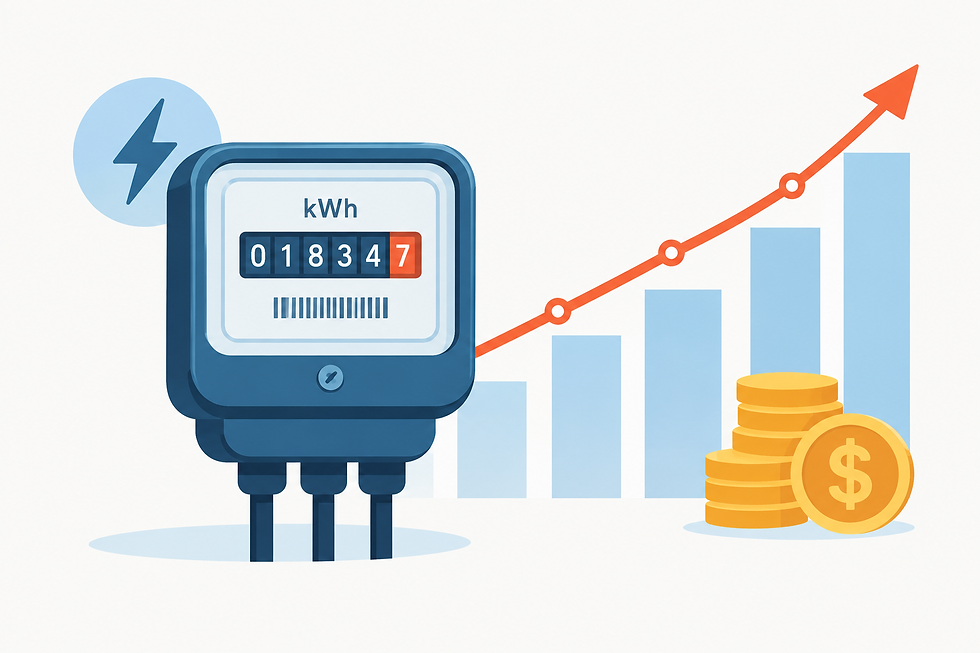
Energy cost is the operating expense most consistently underweighted in equipment decisions, largely because it's invisible on the purchase quote and only shows up gradually on utility bills over months of operation. But because it scales directly with production volume — every ton processed consumes energy — it compounds into one of the largest cumulative cost components over a multi-year operating life, particularly for continuous, high-throughput operations.
Why the Cheapest Machine Often Isn't the Cheapest Choice
This is the core finding TCO analysis keeps surfacing across grinding and milling equipment broadly: lower-quality construction and less efficient designs frequently cost less to buy but meaningfully more to operate, while higher-quality, better-engineered equipment costs more upfront but delivers a lower total cost once energy, wear parts, and downtime are factored in over the equipment's operating life. The purchase price comparison that looks favorable in a procurement spreadsheet often reverses once the full picture is built out.
Questions to Ask a Supplier Before Calculating Your Own TCO

Before you can build an accurate TCO comparison, you need real numbers from each supplier, not marketing estimates: ask for documented specific energy consumption (kWh per ton) for your actual material and target fineness, expected wear-part service life and replacement cost under your specific process conditions, stated duty-cycle rating and typical maintenance interval, and — ideally — reference customers running a comparable application who can speak to real-world operating cost. A supplier confident in their equipment's total cost of ownership will have specific answers ready; one relying on purchase price as the main selling point often won't.
Conclusion
The real cost of a bead mill isn't on the invoice — it's in the energy bill, the wear part replacements, and the downtime that accumulate over years of operation. Comparing equipment on purchase price alone is the single most common way procurement teams end up with a more expensive machine than the one they thought they were avoiding. Contact Sanxing Feirong Machinery to work through a total cost of ownership comparison for your specific application.
Frequently Asked Questions
Why is purchase price such a poor predictor of total equipment cost?
Because energy consumption, wear part replacement, and downtime accumulate continuously over years of operation, while purchase price is a one-time cost — over a multi-year operating life, the ongoing costs typically dwarf the initial purchase price.
How much does energy consumption typically vary between bead mills?
Specific grinding energy for wet bead milling commonly ranges from roughly 5 to 100 kWh per ton, depending on target fineness, material hardness, and equipment design — a wide enough range that it materially affects long-term operating cost.
What's the biggest hidden cost buyers tend to overlook?
Downtime cost is frequently underweighted, since it doesn't appear as a line item on any equipment quote but accumulates through unplanned maintenance, seal failures, and shorter-than-expected service intervals.
How should a buyer actually build a TCO comparison?
Gather real numbers from each supplier for energy consumption, wear part costs, and duty-cycle rating specific to your material and process, then project those figures across a multi-year operating horizon alongside purchase price — rather than comparing quotes alone.


Comments