

What Makes a Bead Mill "Industrial Quality"? A Buyer's Checklist Before You Commit

Author: Moeez Ullah Published: September 6, 2026

At a Glance | Detail |
Focus keyword | Industrial quality bead mill |
Why this matters | "Industrial quality" is marketing language on every supplier's website — it needs concrete evidence, not just a claim |
Core evaluation areas | Certifications, wetted-material specification, duty-cycle rating, seal/wear-part engineering, after-sales response, manufacturing track record |
Common red flag | Certifications or capability claims that can't be verified or don't specifically cover the equipment being sold |
Common buying mistake | Choosing on price alone without weighing wear rate, downtime risk, and total cost of ownership |
What Sanxing brings | 32 years manufacturing experience, 25 patents, ISO 9001 and CE certification |
Every bead mill supplier's website says "industrial quality." Almost none of them explain what that phrase is actually supposed to mean, or how a buyer is supposed to verify it before signing a purchase order. This guide breaks the term down into concrete, checkable criteria — the kind of evidence that separates an industrial quality bead mill from a machine that just looks the part in a product photo.
Why "Industrial Quality" Needs a Definition, Not a Slogan
Industry guidance on selecting a bead mill manufacturer consistently points buyers toward the same starting checklist: research product quality, performance, and after-sales service across different manufacturers, check reputation through reviews and independent references, confirm the specific product features against your actual requirements, and weigh price against quality rather than choosing on price alone (how to select a bead mill manufacturer, Longly Machinery). That's a reasonable starting framework — but it still leaves "quality" undefined. Here's what that actually breaks down into.
Certifications: Necessary, But Not Sufficient on Their Own

What ISO 9001 and CE Actually Tell You
ISO 9001 certification confirms a manufacturer follows a consistent, documented quality management process — not that any single machine has been mechanically tested for your specific application. CE marking similarly confirms compliance with relevant EU safety and performance directives. Both are genuinely meaningful baseline signals, but general industrial certification guidance is direct about their limits: a quality management certification ensures consistent processes, it doesn't specifically test the mechanical performance or capability of an individual piece of equipment for your use case (industrial certification evaluation guide).
Why Verification Matters More Than the Certificate Itself
Broader industrial procurement guidance recommends going a step further than simply checking that a certificate exists: verify its authenticity against the issuing body, confirm the certification's scope actually covers the specific products and locations relevant to your purchase, and ask the supplier to walk through how their quality system functions in practice — with specific examples and metrics, not just a general assurance (industrial certifications and standards guide). A certificate that can't be explained in specifics is a weaker signal than one the supplier can walk you through concretely.
Wetted-Material Specification: The Detail Most Buyers Skip
An industrial-quality bead mill should come with a clear, specific answer to what its chamber lining, rotor, and seal components are actually made of — not a vague "wear-resistant material" claim. For abrasive or high-purity applications, that specification directly determines contamination risk and equipment service life, and a manufacturer who can't answer this question precisely is signaling incomplete engineering documentation, not confidentiality.
Duty Cycle and Continuous Operation Rating

Batch-Rated vs. Continuous-Duty Equipment
Not every bead mill on the market is built for the same operating profile. Equipment rated for intermittent batch use will wear differently — and fail differently — than equipment engineered for continuous, multi-shift production. An industrial-quality machine intended for continuous operation should come with a stated duty cycle rating and documented service intervals, not just a maximum theoretical throughput number pulled from a best-case test run.
Why This Number Gets Glossed Over in Sales Conversations
Throughput and particle size specifications get most of the attention in sales materials because they're easy to compare across suppliers. Duty cycle rating is less commonly volunteered — which is exactly why it's worth asking about directly before purchase, especially for any application running multiple shifts or continuous production.
Seal and Bearing Engineering
Seal design is one of the most common failure points across the entire bead mill category — a theme covered in depth in our seal-free vertical bead mill guide. An industrial-quality machine should have a clearly documented sealing approach (mechanical seal, seal-free, or double-seal configuration), stated expected service life for wear components, and — for mechanical-seal designs — a clear replacement part and service schedule rather than a vague "as needed" answer.
Manufacturing Track Record and Patent Portfolio
Why Longevity and IP Matter as Quality Signals
A manufacturer's track record isn't just a marketing bullet point — it's evidence of accumulated engineering problem-solving across real customer applications over time. Patents specifically covering grinding chamber design, separator systems, or sealing mechanisms indicate original engineering work rather than a design copied from an established competitor, which matters when you're relying on that design to perform reliably for years.
After-Sales Support Response Time
Even the best-engineered equipment eventually needs service, spare parts, or troubleshooting support. An industrial-quality supplier should be able to state clear expectations for support response time and spare parts availability — vague assurances here are one of the more common gaps between marketing claims and real post-purchase experience.
Industrial Quality Bead Mill Checklist

Criterion | What to Ask For | Red Flag |
Certifications | Verifiable ISO 9001 / CE documentation, scope confirmed | Certificate can't be verified or doesn't cover the product line |
Wetted materials | Specific chamber lining, rotor, and seal material specification | Vague "wear-resistant" claims without material names |
Duty cycle rating | Stated continuous vs. batch operation rating with service intervals | Only best-case throughput numbers, no duty cycle data |
Seal/bearing design | Documented sealing approach and expected wear-part service life | No clear answer on seal type or replacement schedule |
Track record & IP | Years in operation, patent coverage on core design elements | No verifiable history or design originality |
After-sales support | Stated response time and spare parts availability commitment | Vague "we'll take care of you" without specifics |
How to Use This Checklist in a Real Buying Conversation

Bring this list directly into supplier conversations rather than treating it as background research. Ask each candidate supplier to answer every row specifically — not with marketing language, but with documentation, part specifications, or named contacts. Suppliers confident in their actual quality will answer directly; suppliers relying on the phrase "industrial quality" as a slogan tend to redirect toward generalities when asked for specifics.
Why This Matters More Than Price Comparison Alone
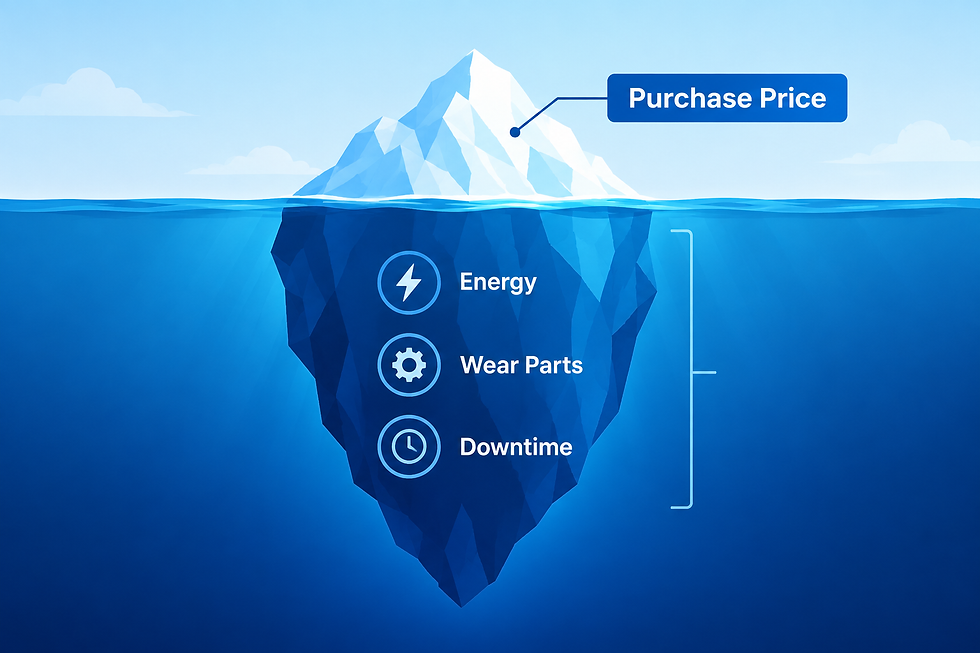
Choosing bead mill equipment purely on upfront price, without verifying the criteria above, is one of the more common ways buyers end up with unplanned downtime, inconsistent particle size results, or premature wear-part replacement costs that erase any initial savings. The equipment that looks identical in a product photo can differ enormously in wetted-material quality, duty-cycle engineering, and long-term support — differences that only show up after months of operation unless they're verified upfront.
Conclusion
"Industrial quality" should be a checklist you can verify, not a phrase you have to take on faith. Sanxing Feirong Machinery brings 32 years of manufacturing experience, 25 patents, and ISO 9001 and CE certification to that conversation — but we'd rather you ask every question on this list than take our word for it. Contact Sanxing Feirong Machinery to see the documentation behind those credentials.
Frequently Asked Questions
Is ISO 9001 certification enough to guarantee bead mill quality?
No, it confirms the manufacturer follows a consistent quality management process, but it doesn't test the mechanical performance or suitability of a specific machine for your application. It's a useful baseline signal, not a complete quality guarantee on its own.
What's the biggest quality detail buyers commonly overlook?
Duty cycle rating whether equipment is designed for continuous multi-shift operation versus intermittent batch use — is less commonly volunteered in sales conversations than throughput and particle size specs, but it directly affects real-world reliability.
Why does a manufacturer's patent portfolio matter for equipment quality?
Patents covering core design elements like grinding chamber or separator systems indicate original engineering work behind the equipment, rather than a design copied from an established competitor.
How can I verify a supplier's certifications are legitimate?
Check the certificate against the issuing body's database, confirm its scope actually covers the specific product line you're purchasing, and ask the supplier to explain how their quality system functions in practice with specific examples.


Comments