

Seal-Free Vertical Bead Mill: How Sanxing's SP Series Eliminates Leakage and Downtime

Author: Moeez Ullah Published: August 20, 2026

Quick Overview
At a Glance | Detail |
Focus keyword | Seal-free vertical bead mill |
Core problem solved | Mechanical seal leakage, contamination, unplanned downtime |
Flagship product | SP Series Seal-Free Vertical Bead Mill |
Related models | SD Series Dual-Power, SF Series Mechanical-Seal Model, WS Series Horizontal, F4/W Lab models |
Best for | Inkjet ink & pigments, lithium battery slurries, pesticide SC, ceramics, fine chemicals |
Manufacturer experience | 32 years, 25 patents, ISO 9001 & CE certified |
Across the wet-grinding industry, one component causes more unplanned downtime, contamination complaints, and maintenance calls than any other part of a bead mill: the mechanical seal. This guide explains what a seal-free vertical bead mill actually is, why seal failure is such a persistent problem industry-wide, and how Sanxing Feirong Machinery's SP Series is engineered around it.
What Is a Seal-Free Vertical Bead Mill?
A seal-free vertical bead mill is a wet-grinding machine designed so the grinding chamber does not rely on a pressurized mechanical seal at the point where the agitator shaft enters the chamber — the single most common failure point on conventional bead mills. Instead, the vertical orientation and internal separation design keep grinding media and slurry contained using gravity-assisted separation rather than a wearing seal face.
How It Differs From Mechanical-Seal Designs
Traditional horizontal and many vertical bead mills use a rotating mechanical seal — two precision-machined faces pressed together — to stop slurry and coolant from escaping around the drive shaft. That seal is a wear part by design: it degrades with every hour of operation, and once it starts leaking, it typically needs replacement or refurbishment to restore reliable operation.
Why Mechanical Seal Failure Is the #1 Bead Mill Maintenance Problem

The Cost of Seal Leakage and Unplanned Downtime
Mechanical seals are described across the industry as a core wear component that "directly affects the mill's service life and grinding performance," and seal-related maintenance guides consistently list leak checks, seal fluid monitoring, and seal replacement as recurring maintenance tasks that plants have to build into their schedules (bead mill mechanical seal selection guide). Every one of those maintenance events is a production line stopped, not just a part replaced.
Contamination Risk in Seal-Based Systems
When a seal degrades, it doesn't just leak slurry outward — it can allow coolant or lubricant to migrate into the product stream, which is a serious quality problem for pharmaceutical-grade, battery-material, or high-purity pigment applications where even trace contamination can fail a batch. Case studies on seal reliability issues at ink manufacturing plants have documented exactly this pattern: repeated seal failures driving excessive downtime, repair costs, and production impact until the sealing approach itself was redesigned (NASH seal reliability case study).
How Sanxing's SP Series Seal-Free Vertical Bead Mill Works

Gravity-Assisted Sealing Design
The SP Series uses a vertical chamber layout where gravity works with the internal separation system to keep grinding media and slurry where they belong, removing the pressurized seal face as a wear point. Fewer wear-prone sealing components means fewer of the unplanned shutdowns that seal-based systems are prone to.
SD Series Dual-Power: Flexibility Without Sacrificing Reliability
For operations that need more configuration flexibility different viscosities, batch sizes, or throughput targets — the SD Series Dual-Power model extends the same low-maintenance philosophy with adjustable power delivery for a wider range of materials.
SF Series Mechanical-Seal Model: When You Still Need It
Not every application calls for a seal-free design some high-pressure or specialty processes still perform best with a precision mechanical seal. That's why Sanxing also offers the SF Series Mechanical-Seal Model, so the choice is based on your process requirements rather than a one-size-fits-all product line.
Seal-Free vs Mechanical-Seal Bead Mill

Factor | Mechanical-Seal Bead Mill | Seal-Free Vertical Bead Mill (SP Series) |
Primary wear point | Rotating seal face | No pressurized seal face |
Leak/contamination risk | Higher over time as seal wears | Substantially reduced |
Maintenance schedule | Regular seal inspection & replacement | Reduced seal-related maintenance |
Best suited for | High-pressure, specialty processes | High-purity, continuous-run production |
Downtime risk from sealing | Higher | Lower |
industries That Benefit Most From Seal-Free Grinding

Inkjet Ink & Pigments — contamination-sensitive formulations where seal fluid ingress can ruin a batch.
Lithium Battery Materials — cathode, anode, and solid electrolyte slurries that demand high purity and consistent particle size.
Pesticide Suspension Concentrates — continuous production runs where unplanned seal downtime directly costs throughput.
Advanced Ceramics — ultra-fine grinding where any contamination affects structural material performance.
Real-World Impact: What Reduced Seal Downtime Looks Like
Seal-related stoppages rarely show up as one dramatic failure — they accumulate as a pattern of small, recurring interruptions: a leak check that turns into an unscheduled shutdown, a seal fluid top-up that becomes a full replacement, a batch flagged for contamination review. Industry maintenance guides consistently list mechanical seal inspection as a weekly or even daily task precisely because seal wear is continuous, not occasional. For a production line running multiple shifts, even a modest reduction in seal-related stoppages compounds into meaningfully more run-time across a month. That's the practical case for a seal-free design: it's not that seals are eliminated as a concept everywhere in the machine, but that the highest-failure-rate seal point in the system — the shaft entry into the grinding chamber — is designed out rather than maintained around.
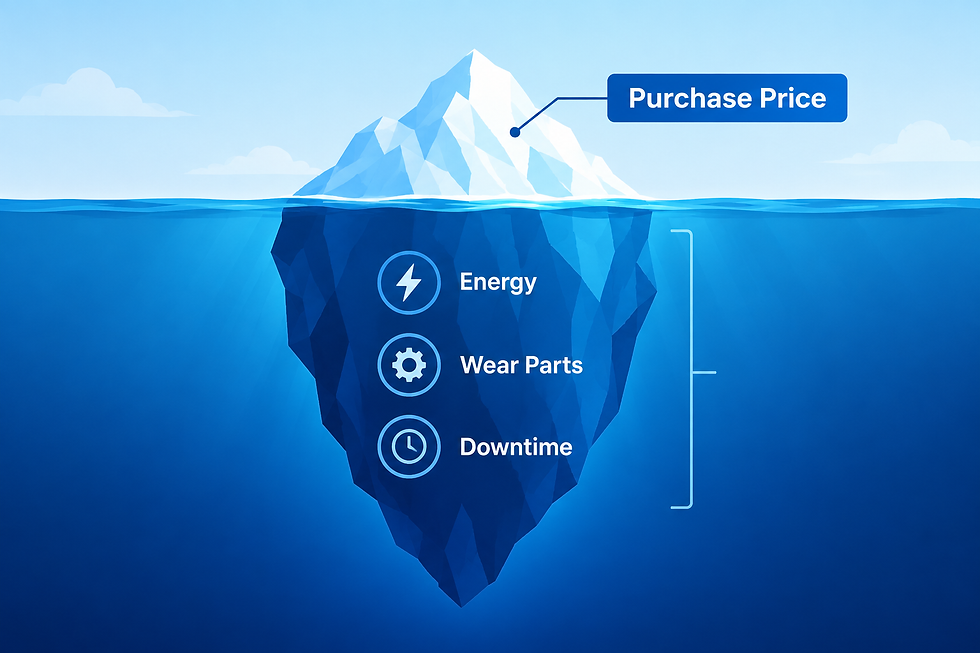
Total Cost of Ownership, Not Just Purchase Price
When comparing bead mill options, purchase price alone understates the real cost difference. Seal replacement parts, the labor to install them, and the production time lost during each seal-related stoppage all add up over the equipment's service life. Buyers evaluating a seal-free vertical bead mill against a mechanical-seal alternative should weigh the total cost of ownership across a multi-year horizon, not just the invoice at purchase.
What to Look for When Evaluating a Seal-Free Bead Mill Supplier
Not every "seal-free" claim holds up under real production conditions. When evaluating suppliers, ask for documented particle size and purity data from comparable applications, confirm certifications (ISO 9001, CE) rather than taking marketing claims at face value, and ask directly how the manufacturer's design handles the specific viscosity and abrasiveness of your material — since gravity-assisted separation performs differently across material types. It's also worth asking about after-sales technical support response times, since even low-maintenance equipment eventually needs service, and how quickly a supplier can support you matters as much as the equipment design itself.
Conclusion
Mechanical seal failure remains the single most common source of bead mill downtime and contamination risk across the industry. A seal-free vertical bead mill design removes that failure point at the source. Contact Sanxing Feirong Machinery to discuss whether the SP Series Seal-Free model fits your production line.
Frequently asked questions
What makes a bead mill "seal-free"?
A seal-free bead mill's design removes the pressurized mechanical seal at the shaft entry point as the primary containment method, typically using a vertical chamber layout and gravity-assisted separation instead.
Does a seal-free design mean less maintenance overall?
It significantly reduces the seal-specific maintenance (leak checks, seal fluid monitoring, seal replacement) that mechanical-seal bead mills require, though other wear parts like grinding media and chamber linings still need routine attention.
Is a seal-free bead mill suitable for all materials?
Most materials suit a seal-free vertical design well, but very high-pressure or certain specialty processes may still be better served by a mechanical-seal model like Sanxing's SF Series — material properties should guide the choice.
How does Sanxing's SP Series compare to the SD Series?
The SP Series is the core seal-free vertical model, while the SD Series Dual-Power adds adjustable power configuration for businesses processing a wider range of viscosities or batch sizes.


Comments